Dye Notes

Dye Notes

A transparent record of how the cloth is dyed: materials, methods and measurements.

Cotton double gauze and linen are dyed in small batches, by machine and by hand.

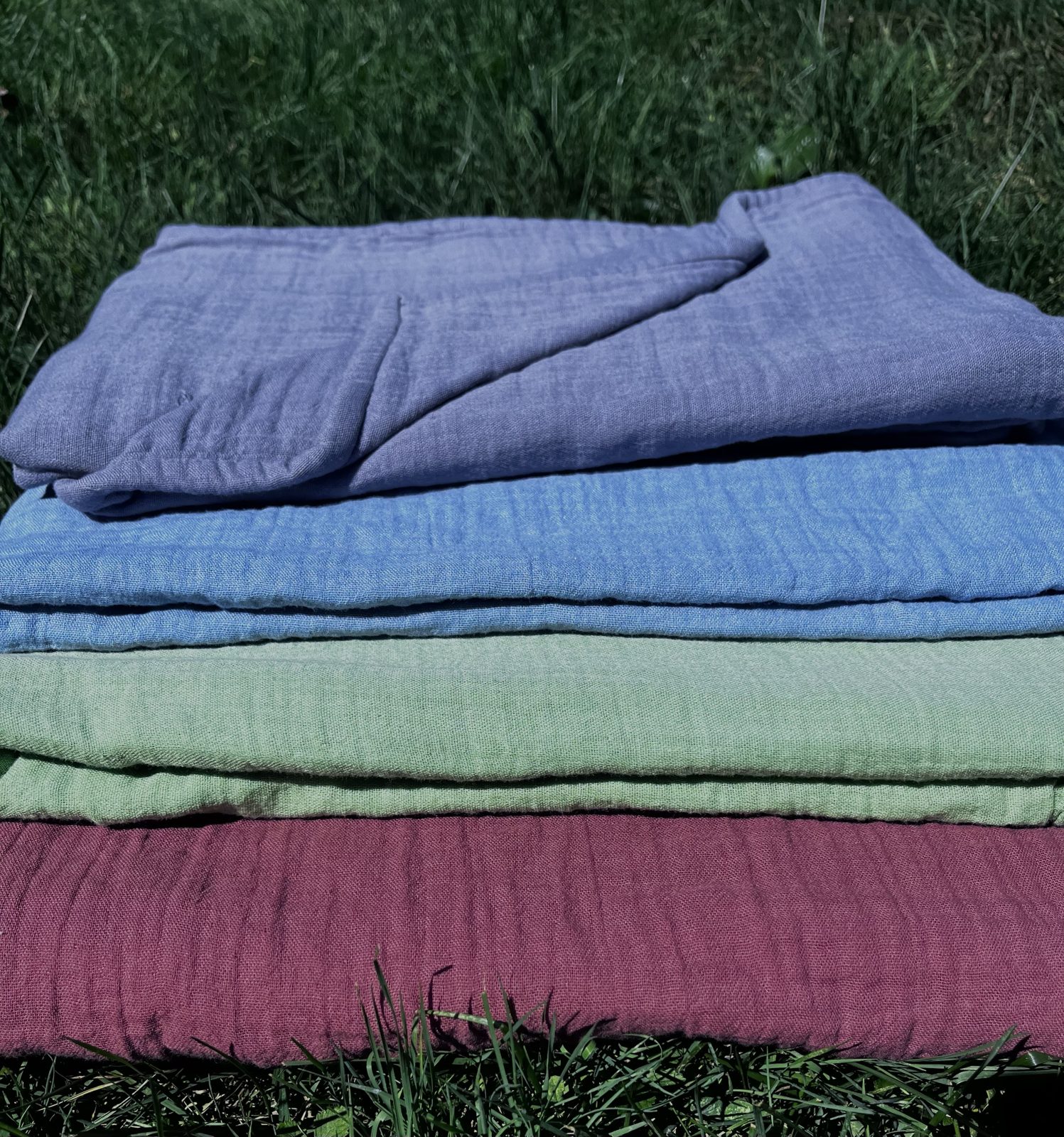
Stack of hand-dyed double gauze in periwinkle, cornflower blue, sage green and plum, on the grass

Materials

Materials

Dharma Fiber Reactive Procion MX dyePowdered dye for cotton, linen and other plant fibers. It bonds with the fiber, so the color doesn't wash out.
Soda ashThe fixer. It raises the pH so the dye bonds to the cloth.
SynthrapolA detergent for the final wash. It carries loose dye away so it doesn't settle back on the fabric.
A washing machineFor solid colors on big pieces like throws and baby blankets.
Dye vesselsFor low water immersion and shibori, where I want mottled or patterned color.
A scale and measuring spoonsDedicated to dye work.
Cotton double gauze and linenPlant fibers take fiber reactive dye best.

One batch, by the numbers

What a batch takes

A typical washing-machine batch. Amounts change with the color and the weight of the fabric.

2 TbspDharma dye, typical
⅙ bottleSynthrapol for the wash-out
3 loadsPrep wash, dye, final wash
1 hourHands-on time

Methods

Three methods

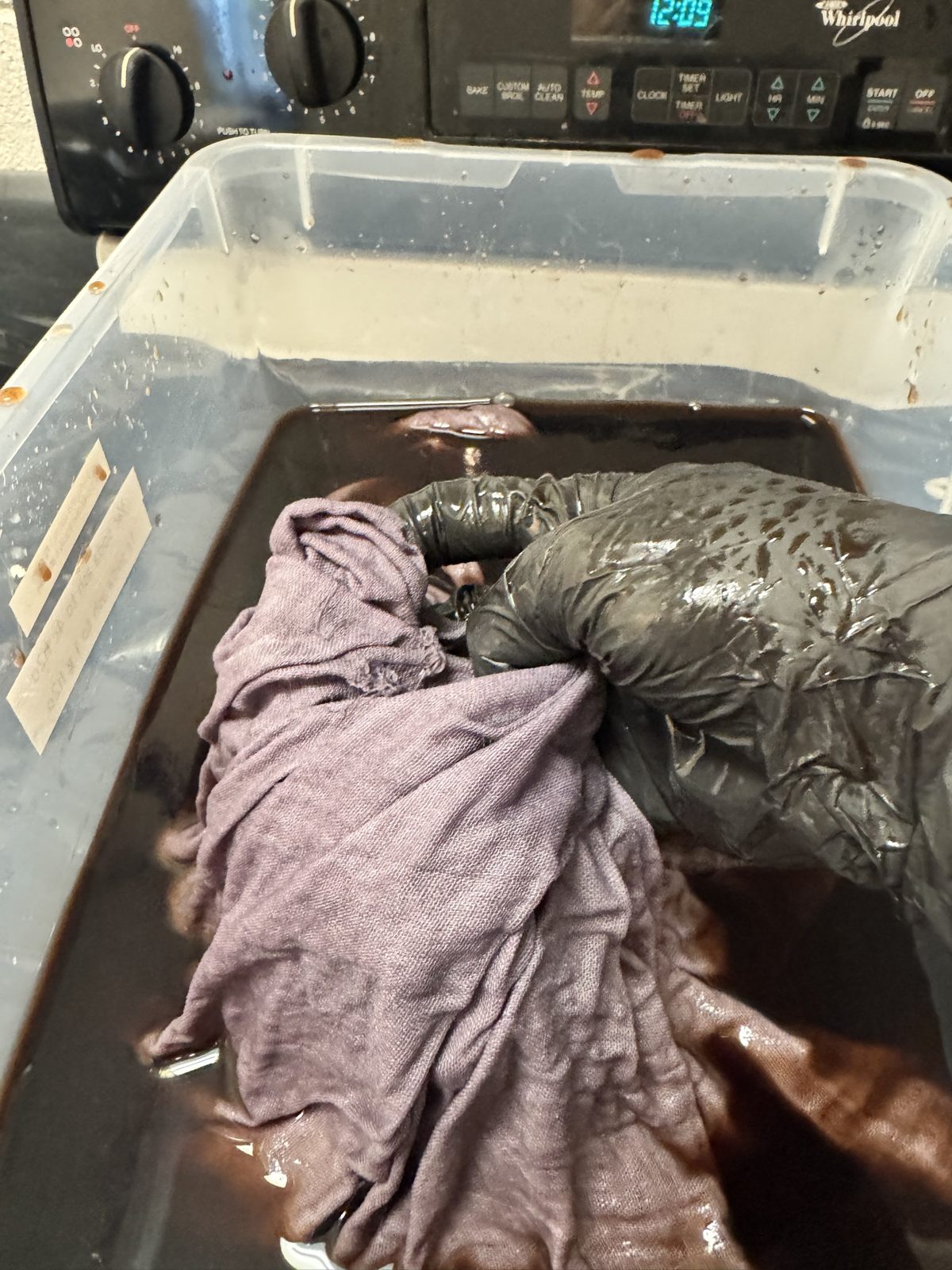
Washing machine

Constant agitation gives even, solid color. Used for baby blankets and throws.

LOOK
Smooth, solid color
GOOD FOR
Big pieces, matching sets
NOTE
The larger water volume dilutes the dye, so ratios are adjusted to compensate.

Low water immersion

Fabric is gathered in a vessel with minimal water, so the dye pools and leaves a mottled, painterly color.

LOOK
Mottled, deep, no two alike
GOOD FOR
Landscape skies and ridges; deepening a color by over-dyeing
NOTE
Less water concentrates the color.

Shibori

Folding, twisting, binding or clamping the cloth before it goes in the dye, so some parts resist the color. I learned it in classes at Wax On Boutique in Asheville.

LOOK
Patterns: stripes, rings, grids
GOOD FOR
Shibori throws, purses
NOTE
Each pattern is revealed only when the cloth is unbound.

From the journal

From rose to cherry: developing a colorway

The goal was a truffle brown, dyed in the washing machine at the standard ratio for the weight of the fabric.

The result was a light rose. A washing machine uses a large volume of water, so at the same ratio far less dye reaches the cloth.

The rose cloth was then over-dyed by low water immersion, with less water and a stronger ratio:

1 tablespoon + 1 teaspoon of truffle: a deep cherry.
From the dye studio

Gallery

Good to know

Safety & care

WORKING SAFELY

  • Wear a dust mask and gloves when you measure dye powder. Fine powder is easy to breathe in.
  • Keep dye tools separate from kitchen tools.
  • Soda ash is caustic; wear gloves.
  • Run an empty hot wash after dyeing in the washing machine.

CARING FOR HAND-DYED PIECES

  • Every piece is washed out with Synthrapol before it leaves the studio.
  • Wash cold, by itself.
  • Colors are set with a dye fixative and should not bleed.
  • Natural fibers lighten gradually in sunlight.

Hand-dyed work

Baby blankets, throws, runners and the art quilts all begin as hand-dyed cloth. New colorways are announced in the newsletter first.